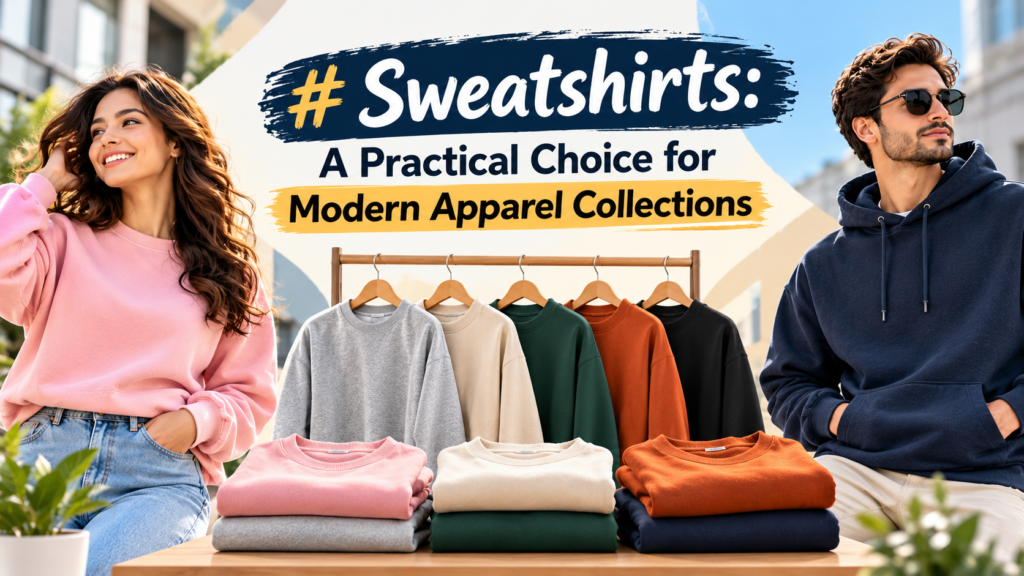
Comfortable clothing has become an important part of everyday fashion. People want garments that are easy to wear, simple to style, and suitable for different activities. Sweatshirts meet these needs by combining comfort with versatility, making them popular among individuals, retailers, and businesses.
Whether used for casual outfits, team clothing, or promotional merchandise, sweatshirts offer plenty of possibilities. Choosing the right styles and materials can help businesses build a collection that serves different customer preferences.
Why Hooded Sweatshirts Are a Popular Choice
Hooded sweatshirts are valued for their practical design and relaxed appearance. The hood provides an additional layer of coverage, while the front pocket featured on many designs offers everyday convenience. These garments can be worn with jeans, joggers, or casual trousers for a comfortable look.
For clothing retailers and apparel businesses, sourcing bulk hooded sweatshirts can be a useful way to maintain inventory and offer multiple options to customers. Ordering larger quantities may also help businesses prepare for seasonal demand, provided that quantities are planned according to customer needs.
Before selecting products, businesses should compare fabric weight, stitching quality, available sizes, and color options. These details can influence the garment’s comfort, durability, and overall appearance.
Finding Suitable Apparel for Retail and Customization
The right apparel selection depends on the intended use. Retail stores may prioritize fashionable colors and popular fits, while businesses ordering uniforms or promotional clothing may focus on consistency, comfort, and customization options.
When exploring port and company wholesale options, buyers should review available garment styles, material specifications, pricing, and minimum order requirements. Checking supplier reliability and confirming product details before purchasing can help businesses make informed decisions.
For customized apparel, it is also useful to consider whether the fabric and garment construction are suitable for screen printing, heat transfers, or embroidery. Selecting appropriate garments can help achieve a professional finished product.
What to Consider Before Placing a Bulk Order
Purchasing clothing in larger quantities requires careful planning. Businesses should evaluate product quality and expected demand before committing to an order.
Here are several important factors to consider:
- Material quality: Choose fabrics that provide suitable comfort and durability.
- Sizing consistency: Check size charts and garment measurements before ordering.
- Color availability: Select colors that suit your customers or brand identity.
- Construction: Inspect seams, cuffs, pockets, and hood details.
- Customization requirements: Confirm that the garments support your preferred printing or embroidery method.
- Delivery arrangements: Review production schedules, shipping costs, and expected delivery times.
Taking these steps can help businesses reduce purchasing risks and maintain consistent product standards.
Simple Ways to Style Sweatshirts
Sweatshirts can be incorporated into many everyday outfits. A classic hoodie paired with jeans and sneakers creates a relaxed appearance, while matching a sweatshirt with joggers offers a coordinated casual style.
Layering is another useful option. During colder weather, sweatshirts can be worn beneath jackets or coats. Lighter designs are also suitable for everyday wear during milder conditions.
For retailers, offering different colors, fits, and fabric weights can make a sweatshirt collection more versatile and appealing to a broader audience.
Conclusion
Sweatshirts continue to be an important part of casual clothing because they offer comfort, practicality, and styling flexibility. Hooded designs are particularly useful for everyday wear, retail collections, and customized apparel projects.
By evaluating garment quality, researching suppliers, and planning inventory carefully, businesses can choose products that meet their requirements. A thoughtful approach to sourcing can help retailers maintain a dependable clothing collection while responding to changing customer preferences.