 By Admin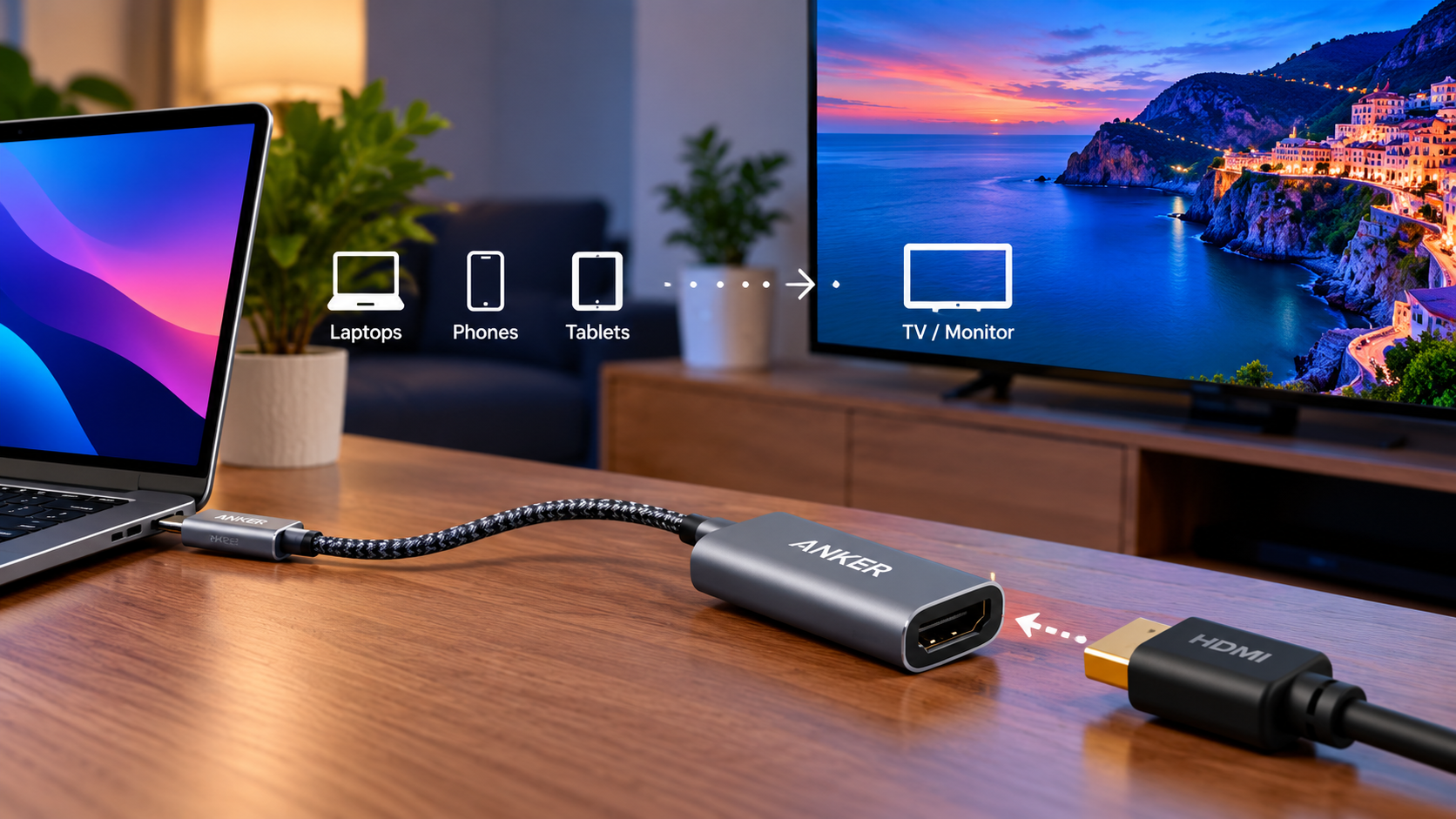
Using the past few years as a baseline, connecting a computer to a television has become a lot simpler. Laptops and other devices have recently adopted the use of USB-C ports. Older style HDMI input displays, such as television and monitor displays, have been around for several years. Because of these port innoveations, users often face issues when trying to extend their computer displays. A USB-C to HDMI cable has become the de facto standard to provide a simple, plug and play solution to extend a user’s computer display. Becoming more knowledgable about these connection types and associated display issues will better equip you to make the correct cable selection.
Using the Appropriate Cable
Before purchasing a USB-C to HDMI Cable, you should check the available connections on both devices. If your computer has USB-C connections that are also used for video output and your TV has HDMI inputs, then a direct cable is an option. When using a cable to connect the two devices, it should also support the video resolution that you are interested in using.
Checking Your Computer’s USB-C Port
Just because a USB-C port is in a rectangle shape, doesn’t mean that it can also be used to output video to your TV. To be sure, check your computer manufacturer’s website or look for labels near the USB-C port. The labels should also explain other features of the USB-C port.
Screen Mirroring and Extended Display
You can use a USB-C to HDMI cable to achieve either mirroring or extending your display, provided that your devices support one of these features. Of course, remember that when using the mirroring feature, your computer’s display and your TV’s display will be the same. Extending your display provides you with additional space, and therefore, more options for application placement. To alter these settings, use your computer’s display settings.
HDMI Audio
An advantage of using an HDMI connection is that he audio signal can also be transmitted along with the video signal. This is supported by the connected equipment. An HDMI connection from a computer to a television can therefore be used to play the audio from the computer through the television. In some cases, the video is displayed on the television but there is no associated sound. Before replacing the HDMI connection, check the audio output setting on the computer and ensure it is set to the HDMI connection, if available.
What Does TV PC HDMI Mean?
TV PC HDMI is a term that describes the connection between a PC/Computer and TV using an HDMI connection. HDMI is the preferred connection for a computer to a TV to get the best digital video/audio signal. People who are searching for TV PC HDMI are interested in learning how to connect their PC to a TV. Sometimes they are also interested in what cable they should use and how to change the input on the TV. The solution to all this depends on the available connections on the PC and the TV.
Using a Television as a Computer Monitor
A large television can be used as an external computer monitor for office work. If the equipment supports it, the television can be used like a regular computer monitor. A large television can also be more comfortable for presentations that require involvement by a group. Use of a television in this manner is also limited by the equipment and cables used, as well as the resolution and the video output settings on the computer.
Using a Television for Gaming
Using a HDMI connection, a computer can be configured to use the television as the computer monitor for gaming. If the television is large and located in a convenient location, gaming from the television can be more enjoyable. There are several trade-offs to using a television as a computer monitor, and some of these are true for gaming as well.
Cable Length and Position
The distance between your computer and television may be a factor in determining the appropriate length of the HDMI cable used in the television-computer display setup. A cable that is too long may cause unnecessary clutter, and a cable that is too short may be totally impractical. Use common sense to determine the appropriate length.
USB-C to HDMI Cable
One of the conveniences of using a larger HDTV in your class or meeting is the ability to display your presentation from a distance using an HDMI connection instead of passing your computer around the room. The HDMI connection can be made with an HDMI Cable or a wireless HDMI connection. Many laptops have a USB-C port and an HDMI Cable can be connected to the port using an HDMI to USB-C adapter. The USB-C port delivers power to the connected device and there may be an image display issue if the connection is not fully established.
About Other Connections
There are other connection options if HDMI does not work for you. You may be able to use your TV’s other connection options, or you may need to find an adapter for your computer. Not all USB-C ports support video output, so an adapter may not work if your computer has a USB-C port but does not support video output. You should first refer to the user guides of your devices for video connection options.
Conclusion
A USB-C to HDMI cable is a great option if your USB-C supported device has video output and your display device supports HDMI input. This connection can be very useful when you want to take your digital experience to your television. Understanding the capabilities of your USB-C supported devices is very important and so is choosing the right cable and the right TV input.
FAQs
What does “No Signal” mean?
Start by checking that your connections are secure. Next, check the input your TV is set to. If you are using a HDMI cable where your TV input is connected via USB-C, check your computer’s settings to allow your computer to show your desktop on an external display.
Can my TV be my computer monitor?
It can! Your TV can then display your computer’s desktop and/or extend your computer’s desktop.