 By Admin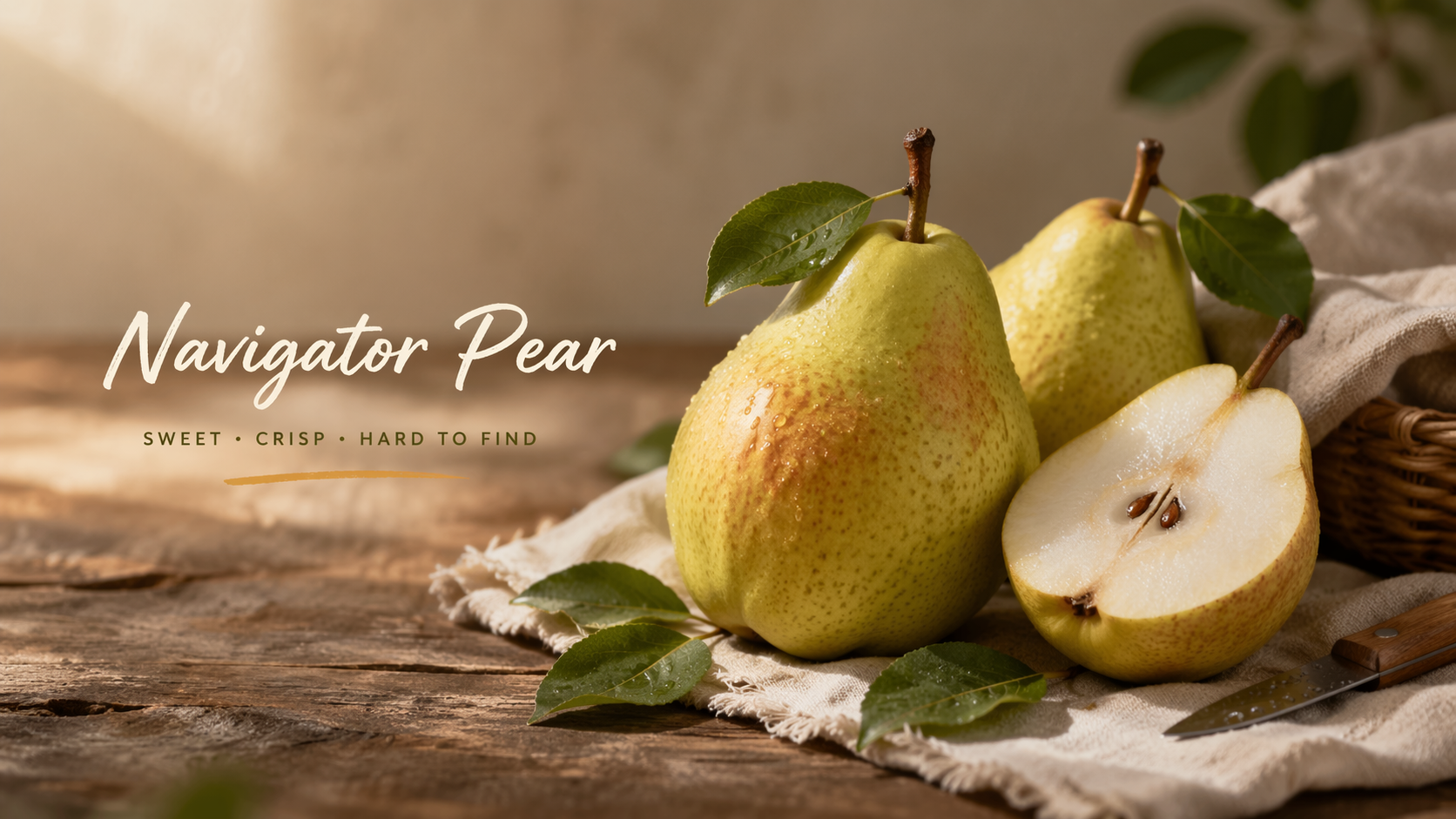
I almost skipped writing about this.
A pear is a pear… right? Like, how much is there to say. You eat it, it’s fine, sometimes it’s too soft, sometimes it’s weirdly hard in the middle — end of story.
But then I ran into something called a navigator pear, and I don’t know… it stuck with me a bit. Not in a dramatic way. Just enough to make me look it up, then try one later, and now I’m here writing about it. Funny how that works.
First — What Even Is It?
Okay, so it’s not some ancient fruit with history and legends. No kings eating it or anything like that.
It’s actually a newer type of pear. Someone (or a group of growers, probably) developed it to fix common pear problems. Which sounds boring, but stay with me.
Because pears do have problems:
- They go from rock-hard to mush way too fast
- Sometimes they taste amazing, sometimes… nothing
- And storing them? Bit of a gamble
So the navigator pear was basically made to be more reliable. Not exciting on paper. But in real life, that matters more than you think.
Quick Details (Just So You Don’t Have to Guess)
| Thing | Reality |
|---|---|
| Color | Starts green, gets a warm yellow tone |
| Texture | Firm longer than usual pears |
| Taste | Sweet, but not flat — a bit of edge |
| Availability | Kinda rare still |
| Vibe | Feels like a “better version” of a regular pear |
“Vibe” isn’t scientific, I know. But it fits.
The Taste — This Is Where It Changed My Mind
I expected it to taste like… well, a pear.
It didn’t. Not exactly.
There’s sweetness, yeah. But it’s not the simple sugary kind. There’s something else in there — a slight sharpness, maybe even a faint spice? Hard to pin down.
And I know that sounds like one of those over-the-top food descriptions, but I’m not trying to make it sound fancy. It just doesn’t taste flat.
Also — important — the texture doesn’t fall apart immediately. That alone makes it better than a lot of pears I’ve had.
You can actually enjoy it slowly without it turning into a mess halfway through.
Why It’s Different (Even If You Don’t Care About Fruit That Much)
Look, if you’re the type who just eats whatever’s in the fridge, this might not matter much.
But if you’ve ever been slightly disappointed by a pear — which, let’s be honest, happens — then this one fixes a few things:
- It holds its shape longer
- The flavor feels more balanced
- It doesn’t rush you into eating it immediately
- And it just feels a bit more… intentional
That’s the best word I’ve got. Intentional.
It Looks Normal… But Also Not
From a distance, you probably wouldn’t notice anything special.
Up close though:
- The skin is smoother than most
- The color shift (green to yellow) is kind of nice
- Sometimes there’s a faint blush, sometimes not
Cut it open and it’s clean, pale, nothing dramatic. But it doesn’t have that grainy look some pears get.
It feels… neat. I guess.
Ways People Use It (Besides Just Eating It Standing in the Kitchen)
You can absolutely just eat it. That’s what I did the first time.
But it works in other ways too, and this is where it gets a bit more interesting.
- Toss it into a salad — it stays firm, doesn’t disappear
- Pair it with cheese (this one actually works really well)
- Bake it — it doesn’t collapse completely
- Cook it lightly, like poaching
- Or even grill it… which I didn’t expect, but apparently it’s a thing
And yeah, if it gets too soft, don’t throw it away. Just cook it down into something.
Timing — Still Matters, But Less Stressful
You still have to pay attention a little. It’s a pear, after all.
But it’s less dramatic than usual.
| Stage | What Happens | What You Should Do |
|---|---|---|
| Not fully ripe | Slight crunch | Good for salads |
| Just right | Juicy, balanced | Eat it like a normal person |
| Too ripe | Soft, sweeter | Cook it, mash it, something |
There’s a bit more flexibility here, which I appreciated more than I expected.
Growing It (I Had to Look This Part Up)
I’m not growing pears anytime soon, but I was curious.
Apparently, this tree is easier to deal with than older varieties. Less disease trouble, adapts better, that kind of thing.
- Works in different climates
- Doesn’t need constant attention
- Grows to a reasonable height
- Produces fruit fairly reliably
So if someone’s planting a tree, I can see why they’d pick this one.
It’s practical. Not flashy.
Health Stuff — You Already Know This Part
It’s fruit. So yes, it’s healthy.
- Fiber
- Water
- Light sugar
- Easy on digestion
Nothing surprising. But still worth mentioning, I guess.
Why It’s Not Everywhere Yet
This part confused me at first.
If it’s better… why isn’t it common?
From what I can tell, it’s just still spreading. These things take time. Farmers don’t switch crops overnight, and stores stick with what sells.
So right now, it’s more of a:
- Local orchard thing
- Small grower thing
- “If you find it, you find it” situation
Which is a bit annoying, but also kind of nice.
Final Thought — Not Life-Changing, But Still…
I’m not going to say this pear changed everything.
It didn’t.
But it did make me realize how… average most pears are. And how small improvements actually matter.
The navigator pear isn’t louder or sweeter or bigger.
It’s just better in a quiet, steady way.
And weirdly, that’s what makes it stand out.
Want to read more like this? Check out smoothiepussit for more interesting articles.