 By Admin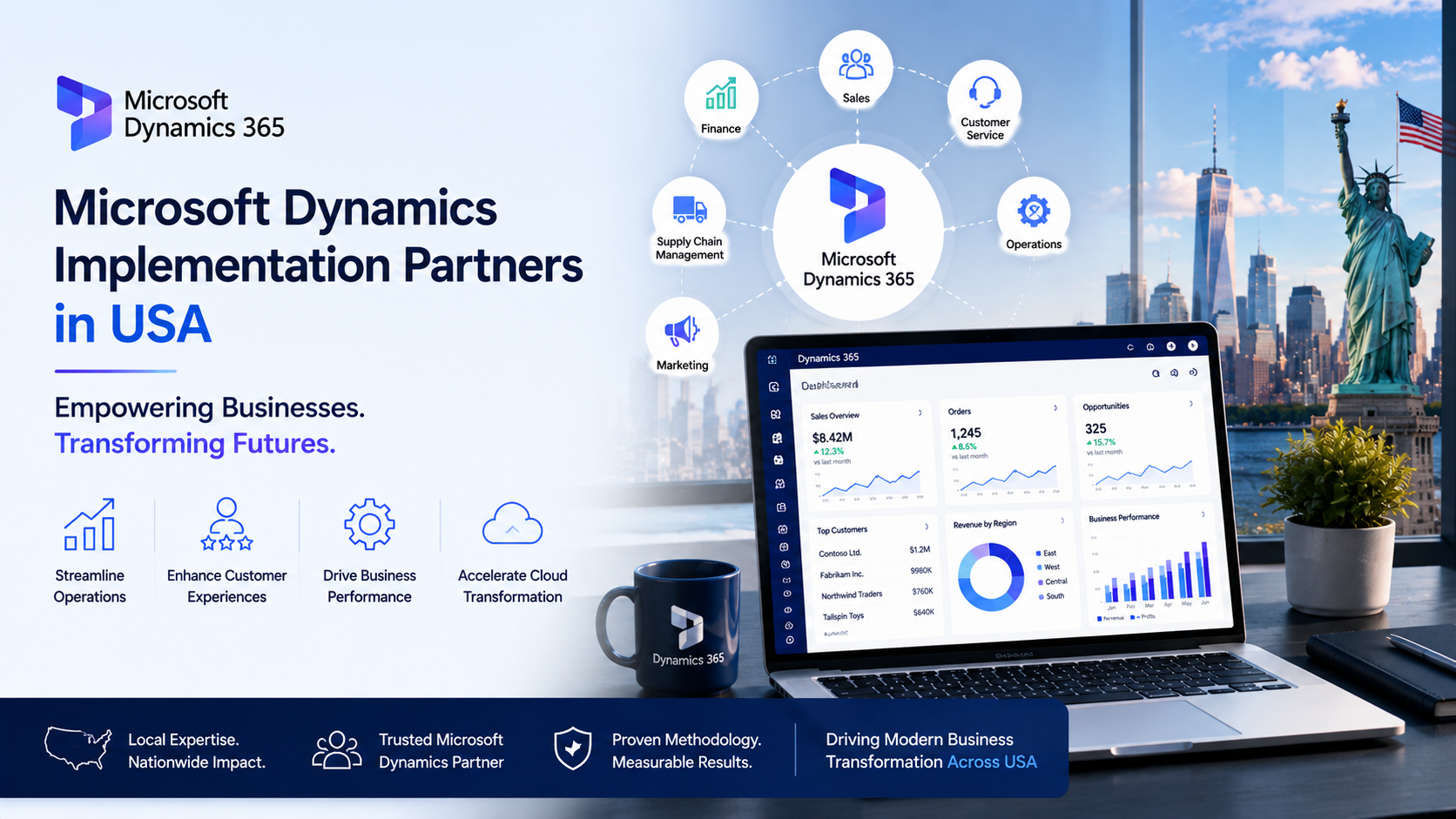
Businesses across the United States are rapidly adopting digital technologies to improve efficiency, automate operations, and enhance customer experiences. As organizations continue modernizing their infrastructure and business processes, Microsoft Dynamics has become one of the most trusted enterprise platforms for managing finance, customer relationships, operations, inventory, and supply chain activities within a unified system.
Today, organizations across industries are increasingly working with experienced microsoft dynamics implementation partners in USA to successfully deploy and customize Microsoft Dynamics solutions according to their operational goals. At the same time, businesses are partnering with a reliable managed cloud service provider in USA to strengthen cloud infrastructure, improve cybersecurity, and support scalable digital operations.
The combination of Microsoft Dynamics and managed cloud services enables organizations to build secure, intelligent, and future-ready business environments that support long-term growth and operational efficiency.
Understanding Microsoft Dynamics Implementation
Microsoft Dynamics is a comprehensive suite of ERP and CRM applications designed to help businesses centralize operations, automate workflows, and improve decision-making capabilities. The platform supports core business functions such as finance, sales, customer service, inventory management, human resources, and supply chain operations.
A successful implementation requires careful planning, customization, integration, and ongoing support. This is why businesses rely on microsoft dynamics implementation partners in USA to manage deployment efficiently while minimizing operational disruptions.
The implementation process generally includes:
- Business requirement analysis
- Solution design and architecture planning
- System customization and configuration
- Data migration and integration
- Testing and deployment
- Employee training and support
- Ongoing optimization and maintenance
An experienced implementation partner ensures that the system aligns with business objectives and industry-specific operational requirements.
Why Businesses in USA Are Choosing Microsoft Dynamics
Organizations across the USA are increasingly adopting Microsoft Dynamics because it supports digital transformation while improving business performance and scalability.
Centralized Business Operations
Microsoft Dynamics integrates multiple business functions into one platform, helping organizations improve collaboration and eliminate disconnected systems.
Real-Time Analytics and Reporting
Advanced dashboards and analytics tools provide businesses with accurate real-time insights for faster and more informed decision-making.
Enhanced Customer Experience
Integrated CRM functionalities help organizations improve customer communication, personalize services, and strengthen customer relationships.
Flexible Cloud Deployment
Cloud-based deployment allows employees to securely access systems and business data from anywhere.
Scalability for Business Growth
Microsoft Dynamics solutions can scale according to operational demands and future business expansion.
Role of microsoft dynamics implementation partners in USA
Deploying enterprise technology requires technical expertise, industry knowledge, and strategic planning. Certified microsoft dynamics implementation partners in USA help organizations implement Microsoft solutions effectively while ensuring operational alignment and long-term success.
Implementation partners generally provide:
- Technology consulting and planning
- Dynamics ERP and CRM deployment
- Workflow automation
- Data migration and system integration
- Cloud deployment support
- Security and compliance management
- User training and technical support
- Ongoing system optimization
These services help businesses reduce deployment risks while maximizing operational efficiency.
Key Stages of Microsoft Dynamics Implementation
A structured implementation process helps ensure successful deployment and long-term operational value.
1. Business Requirement Analysis
The first stage involves understanding the organization’s business operations, technical challenges, and goals.
This phase includes:
- Reviewing existing workflows and systems
- Identifying operational inefficiencies
- Defining implementation objectives
- Gathering technical requirements
- Assessing scalability needs
Detailed analysis helps implementation experts create customized deployment strategies.
2. Solution Design and Planning
Once business requirements are finalized, implementation teams design a tailored Dynamics solution.
Key activities include:
- Selecting appropriate Dynamics modules
- Designing automation workflows
- Planning system integrations
- Defining implementation timelines
- Establishing cloud deployment strategies
Many organizations also collaborate with a managed cloud service provider in USA during this phase to create scalable and secure cloud environments.
3. System Configuration and Customization
Every business has unique operational requirements that require customization.
Customization may include:
- Automated approval workflows
- Custom dashboards and analytics
- Role-based access controls
- Industry-specific process automation
- Workflow optimization features
Customization ensures the system aligns with organizational processes and business objectives.
4. Data Migration and Integration
Data migration is one of the most important stages of implementation. Businesses must ensure accurate and secure transfer of data from legacy systems into Microsoft Dynamics.
The migration process generally includes:
- Data cleansing and validation
- Data mapping and transformation
- Integration with third-party applications
- Data accuracy testing
- Security verification
An experienced managed cloud service provider in USA can help businesses improve cloud security, backup management, and migration reliability.
5. Testing and Deployment
Before deployment, the system undergoes comprehensive testing to ensure operational reliability and performance.
Testing generally includes:
- Functional testing
- Performance testing
- Security testing
- User acceptance testing (UAT)
- Workflow validation
Once testing is completed successfully, the platform is deployed for live business operations.
6. Employee Training and Support
User adoption is essential for implementation success.
Training programs generally cover:
- System navigation and usability
- Reporting and analytics
- Workflow management
- Security practices
- Troubleshooting basics
Ongoing support helps employees adapt quickly and improve productivity.
Importance of Managed Cloud Services
Cloud computing has become a critical part of modern enterprise operations. Organizations across the USA are increasingly working with a managed cloud service provider in USA to improve infrastructure flexibility, security, and operational performance.
Managed cloud services help businesses manage cloud infrastructure efficiently while reducing IT complexity and operational risks.
Managed cloud services generally include:
- Cloud infrastructure management
- Cloud migration services
- Backup and disaster recovery
- Cybersecurity monitoring
- Application hosting and management
- Cloud performance optimization
- Data storage and analytics
- Compliance and governance management
These services allow organizations to focus on business growth while cloud experts manage infrastructure and operations.
Benefits of Working with a Managed Cloud Service Provider
Enhanced Security
Managed cloud providers implement advanced cybersecurity solutions to protect sensitive business information from cyber threats.
Improved Operational Efficiency
Cloud management services reduce infrastructure complexity and improve overall business productivity.
Scalable Infrastructure
Organizations can quickly scale cloud resources according to operational requirements.
Business Continuity
Backup and disaster recovery solutions help maintain uninterrupted business operations during unexpected disruptions.
Reduced Infrastructure Costs
Cloud services eliminate the need for expensive on-premise infrastructure and maintenance.
Continuous Monitoring and Support
24/7 monitoring helps identify and resolve technical issues before they affect business operations.
Industries Using Microsoft Dynamics and Managed Cloud Services
Microsoft solutions are widely adopted across several industries in the USA.
Healthcare
Healthcare organizations improve patient management, compliance, and operational efficiency.
Retail and E-Commerce
Retail businesses enhance inventory management, customer engagement, and sales tracking.
Manufacturing
Manufacturers optimize production planning, warehouse operations, and supply chain management.
Financial Services
Financial institutions improve reporting, cybersecurity, and customer communication systems.
Logistics and Transportation
Logistics businesses improve fleet operations, warehouse management, and delivery tracking.
Real Estate
Real estate companies streamline property management, customer interactions, and financial operations.
Challenges During Digital Transformation
Although Microsoft Dynamics and cloud technologies provide significant advantages, businesses may encounter several challenges during implementation.
Common challenges include:
- Legacy system integration complexities
- Data migration risks
- Employee resistance to change
- Cybersecurity concerns
- Budget and timeline management
- Limited internal technical expertise
Working with experienced microsoft dynamics implementation partners in USA and a trusted managed cloud service provider in USA helps organizations overcome these challenges more effectively.
Choosing the Right Microsoft Dynamics and Cloud Partner
Selecting the right technology partner is essential for long-term project success.
Businesses should consider the following factors:
Microsoft Certification
Choose certified Microsoft partners with proven expertise in Dynamics and cloud technologies.
Industry Experience
Select providers with experience in your specific business sector.
End-to-End Services
Look for partners offering implementation, customization, cloud management, integration, and support services.
Proven Track Record
Review case studies, testimonials, and previous client projects before making a decision.
Scalability and Long-Term Support
Choose a partner capable of supporting future business growth and evolving technology requirements.
Future Trends of Microsoft Dynamics and Managed Cloud Services
The future of enterprise technology is closely connected with cloud innovation, artificial intelligence, and intelligent automation.
Emerging trends include:
- AI-powered business automation
- Microsoft Copilot integration
- Predictive analytics
- IoT-enabled operations
- Advanced cybersecurity frameworks
- Intelligent workflow automation
- Industry-specific cloud platforms
As digital transformation accelerates, demand for microsoft dynamics implementation partners in USA and managed cloud service provider in USA solutions will continue increasing across industries.
Conclusion
Microsoft Dynamics and cloud technologies are helping organizations across the United States modernize operations, improve productivity, and accelerate digital transformation initiatives. By working with experienced microsoft dynamics implementation partners in USA, businesses can successfully deploy intelligent ERP and CRM solutions that improve operational efficiency and customer engagement.
At the same time, partnering with a trusted managed cloud service provider in USA enables organizations to build secure, scalable, and future-ready cloud infrastructures that support long-term growth and operational resilience. Together, these technologies empower businesses to remain competitive, agile, and prepared for the future of digital business operations.