 By Admin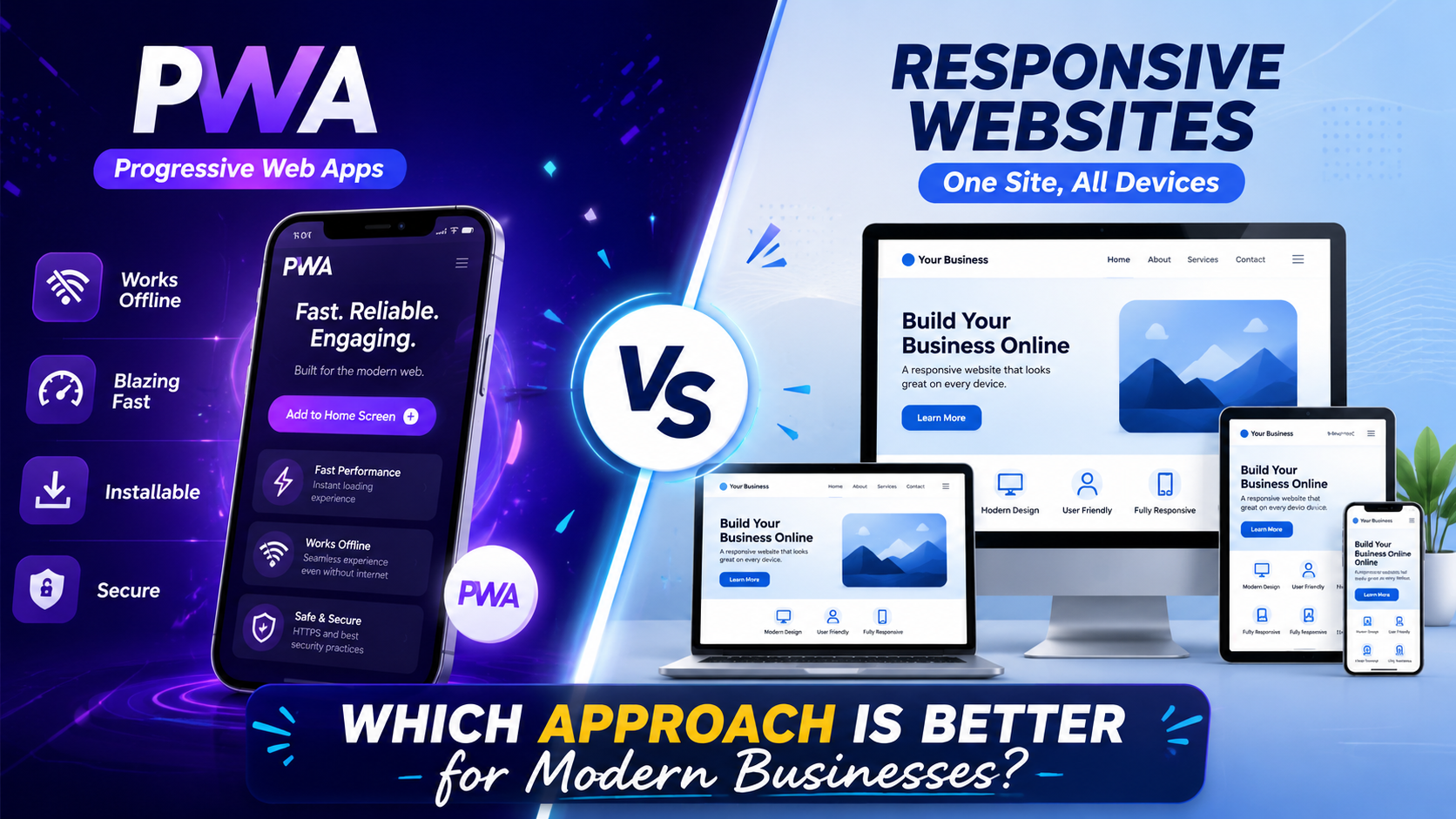
As mobile usage continues to dominate digital interactions, businesses must deliver seamless experiences across devices and platforms. Whether customers are browsing products, accessing services, or consuming content, website performance and usability directly influence engagement and conversions. This has led many organizations to evaluate PWA vs Responsive Websites when planning their digital strategy. While both approaches support mobile users, they differ significantly in functionality, performance capabilities, and long-term business value.
Understanding PWA vs Responsive Websites helps organizations choose the right solution based on user expectations, business objectives, and application requirements.
What Is a Responsive Website?
A responsive website automatically adjusts its layout and content based on the screen size of the device being used. The goal is to provide a consistent browsing experience across desktops, tablets, and smartphones without requiring separate versions of the website.
Key characteristics include:
- Flexible page layouts
- Adaptive images and media
- Mobile-friendly navigation
- Cross-device compatibility
- Consistent content presentation
Responsive design focuses primarily on accessibility and usability, ensuring content remains easy to view and interact with regardless of device type.
What Is a Progressive Web App?
A Progressive Web App (PWA) combines the accessibility of a website with many capabilities traditionally associated with native mobile applications.
Core features include:
- Offline functionality
- Push notifications
- Home screen installation
- Faster repeat visits
- App-like navigation
- Improved user engagement
PWAs use modern web technologies to create interactive experiences while remaining accessible through a web browser.
User Experience Comparison
One of the most important aspects of PWA vs Responsive Websites is the difference in user experience.
Responsive websites focus on:
- Mobile-friendly layouts
- Content accessibility
- Consistent presentation
- Device adaptability
Progressive Web Apps focus on:
- Faster interactions
- Personalized experiences
- App-like behavior
- Enhanced engagement
Businesses seeking deeper customer interaction often consider PWAs because they provide experiences that feel closer to native applications while maintaining the accessibility of the web.
Performance and Loading Speed
Performance directly impacts user satisfaction and conversion rates.
Responsive websites improve performance through:
- Optimized layouts
- Responsive media delivery
- Device-specific presentation
PWAs provide additional advantages such as:
- Resource caching
- Faster repeat visits
- Reduced network dependency
- Offline content availability
These capabilities help create smoother experiences, particularly for users operating on slower or less reliable internet connections.
Offline Access and Reliability
Offline functionality is one of the biggest distinctions in the PWA vs Responsive Websites comparison.
Responsive websites typically require a continuous internet connection to display content and functionality.
Progressive Web Apps can:
- Store content locally
- Display cached resources
- Maintain selected functionality offline
- Improve accessibility during connectivity interruptions
For industries where users frequently access information while traveling or in low-connectivity environments, this capability can provide significant value.
Installation and App-Like Features
Responsive websites are accessed through a browser whenever users visit a page. While this approach provides convenience, it does not offer the application-like experience many users expect from modern digital platforms.
PWAs introduce features such as:
- Home screen installation
- Full-screen browsing
- App-style navigation
- Faster repeat access
- Enhanced user retention
Because of these capabilities, organizations often evaluate PWAs alongside mobile app development services when planning customer-facing platforms. This helps businesses compare development approaches based on user experience, functionality, and long-term maintenance requirements.
SEO and Search Visibility
Search visibility remains a critical consideration for businesses investing in digital platforms.
Both responsive websites and PWAs can support SEO objectives when implemented correctly.
Benefits include:
- Search engine accessibility
- Crawlable content
- Mobile-friendly experiences
- Improved usability
- Better engagement signals
Since both approaches operate on web technologies, businesses can maintain strong organic search visibility while optimizing user experiences.
Development Complexity and Maintenance
Development requirements vary depending on the chosen approach.
Responsive websites generally focus on:
- Layout optimization
- Device compatibility
- Frontend responsiveness
- Content accessibility
PWAs may additionally require:
- Service worker implementation
- Offline caching strategies
- Push notification functionality
- Application installation support
The additional capabilities of PWAs often require more planning, but they can provide greater engagement opportunities for users.
Common Business Use Cases
Different business goals often determine which approach delivers the most value.
Responsive websites are commonly used for:
- Corporate websites
- Marketing platforms
- Content publishing websites
- Information portals
Progressive Web Apps are frequently used for:
- Ecommerce platforms
- Customer portals
- Membership platforms
- Booking systems
- Service-based applications
Selecting the right solution depends on how users interact with the platform and the functionality required to support business objectives.
User Experience and Interface Optimization
Regardless of the chosen approach, user experience remains a major factor in digital success.
Organizations often leverage ui development services to:
- Improve navigation structures
- Enhance accessibility
- Create responsive interfaces
- Optimize user interactions
- Increase engagement
Combining strong interface design with modern web technologies helps businesses create experiences that are both efficient and user-friendly.
Why Businesses Invest in Progressive Web Apps
As mobile engagement continues to increase, many organizations look for solutions that improve accessibility, retention, and performance.
Businesses often partner with a progressive web app development company to:
- Build installable web experiences
- Improve customer engagement
- Support offline functionality
- Enhance performance
- Increase user retention
A structured implementation strategy helps organizations maximize the benefits of Progressive Web App technology.
Future of Mobile Web Experiences
Modern web development continues moving toward faster, more interactive, and highly accessible digital experiences.
Key trends include:
- Offline-first functionality
- App-like browsing experiences
- Enhanced performance optimization
- Greater user engagement
- Cross-platform accessibility
- Improved mobile usability
To support these evolving expectations, many organizations work with a progressive web app development company to create scalable digital platforms that align with changing user behaviors and business requirements.
Conclusion
The debate around PWA vs Responsive Websites ultimately depends on business objectives, user expectations, and platform requirements. Responsive websites provide accessible and device-friendly experiences, while Progressive Web Apps offer advanced capabilities such as offline access, installation features, and enhanced engagement.
Understanding PWA vs Responsive Websites enables organizations to select the most suitable approach for their digital strategy. By aligning technology choices with customer needs and long-term goals, businesses can create experiences that improve accessibility, engagement, and sustainable growth.