 By Admin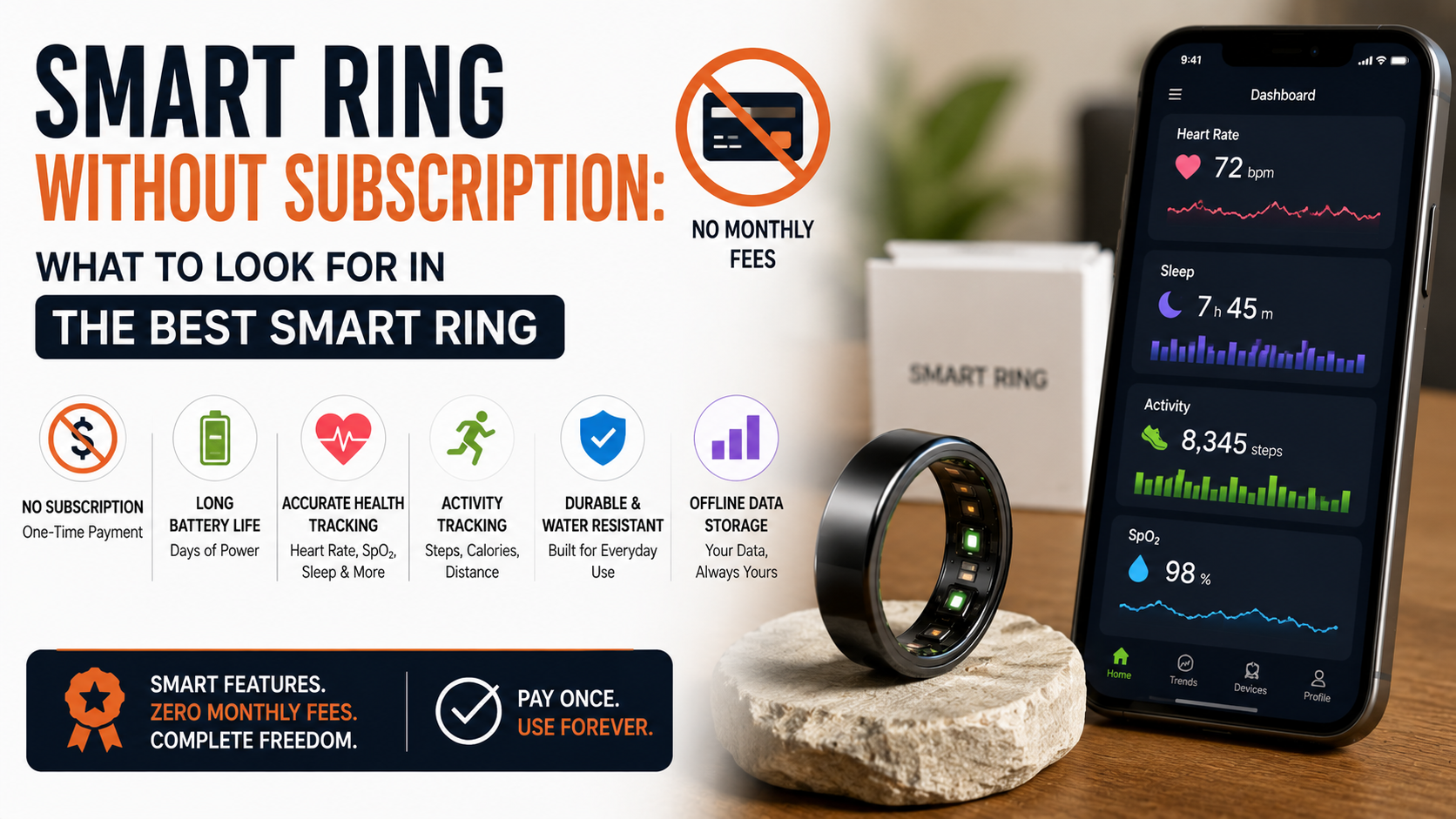
Wearable health tech has gotten smaller and smarter, and a lot of that progress now lives on your finger instead of your wrist. Not every option is built the same way, though — some devices lock their best features behind a monthly fee, while others hand you everything up front. Knowing what separates a smart ring without subscription from the rest of the pack is the key to finding the best smart ring for your budget.
Why the Subscription Question Matters
Before comparing sensors or battery specs, ask one simple question: does this device charge you again after you’ve already paid for it? Some wearables treat detailed sleep reports and long-term trend data as premium add-ons. A smart ring without subscription skips that entirely — your health data stays fully accessible without a recurring bill.
Core Health Tracking You Should Expect
Whatever ring you land on, certain features should come standard. The best smart ring options typically include:
- Sleep stage tracking (light, deep, and REM)
- Continuous heart rate monitoring
- Daily step and activity tracking
- Calorie estimates
- Recovery scoring
- Stress tracking on select models
These aren’t niche extras — they’re the baseline for understanding how your body is actually doing from one day to the next.
Sleep Data That Actually Helps
Sleep tracking is where a good ring earns its place on your finger. By monitoring movement and heart rate overnight, it can map out how much time you spend in each sleep stage and flag patterns that might be cutting into your rest — a late dinner, an inconsistent bedtime, screen time right before sleep. Reviewing that data over a couple of weeks tends to reveal habits worth adjusting, which is far more useful than a single night’s snapshot.
Heart Rate Monitoring Around the Clock
Because a ring sits directly against your skin all day and night, it’s well positioned to track heart rate continuously rather than in brief spot checks. That steady stream of data makes it easier to see how your resting heart rate trends over time, whether you’re recovering properly between workouts, and when your body might be signaling extra stress or fatigue.
Comparing Brands and Long-Term Costs
Not every manufacturer takes the same approach to pricing. Some bundle their best insights into a monthly membership; others include everything with the initial purchase. Companies such as Ringconn have built a reputation around the second approach — offering accurate sensors, durable construction, and long battery life while keeping full access to health data included with the device itself, no ongoing fees required.
If you’re weighing options, it’s worth running the numbers over a year or two. A slightly higher upfront price on a smart ring without subscription often works out cheaper — and simpler — than a lower-cost ring that adds monthly charges on top.
Final Thought
Choosing between a subscription-based wearable and a smart ring without subscription really comes down to what you value more: ongoing coaching features, or predictable costs and full ownership of your data. For most people who just want reliable sleep, heart rate, and activity tracking without a recurring bill, the subscription-free route tends to be the more practical choice. Compare comfort, battery life, sensor accuracy, and pricing carefully, and you’ll come away with the best smart ring for the way you actually live — not just the one with the flashiest marketing.